
Newsletter No. 175
Good afternoon,
Global energy security is back in focus as supply concerns grow across oil and natural gas markets.
Oil prices jumped another 5% as threats to shipping in the Red Sea raised fears of broader Middle East supply disruptions. At the same time, LNG shortages are forcing Europe and Asia to compete for fewer cargoes, with some countries turning to coal, fuel oil and other alternatives.
Europe may also enter winter with its weakest gas storage cushion in 15 years, increasing the risk of higher prices during the heating season.
Meanwhile, Halliburton is investing in technology to improve drilling efficiency, and Magnolia Oil & Gas announced a $4.06 billion acquisition that significantly expands its South Texas position.
In this week’s issue of The Upside, I’ll explain what these developments could mean for energy prices, U.S. production and future investment opportunities.
This Week's Headlines
Oil and Gas News
- Red Sea Tensions Send Oil Prices Higher
- LNG Shortage Pushes Countries to Other Fuels
- Europe Faces Tight Winter Gas Supplies
What's Happening at King
- Oil & Gas Rundown LIVE! Went Live from the Field
Energy Market Perspective
-
Technology Could Strengthen U.S. Energy Production
Move to Watch
-
Magnolia Expands South Texas Footprint
Oil and Gas News
 |
Red Sea Tensions Send Oil Prices Higher
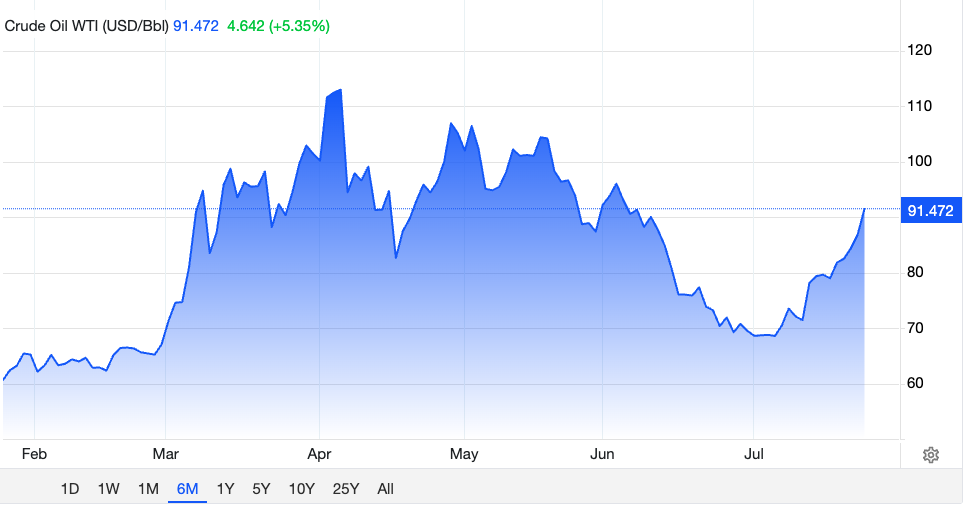
Oil prices climbed for a fifth consecutive day as escalating attacks near the Bab el-Mandeb Strait raised concerns about Middle East supply disruptions. Brent crude moved above $98 per barrel, while WTI approached $90, extending oil’s gain to nearly 20% over the past two weeks. The latest increase followed reported Houthi attacks on two Saudi oil tankers, prompting some vessels to avoid the critical Red Sea shipping route.
LNG Shortage Pushes Countries to Other Fuels
Fighting in the Middle East is disrupting LNG shipments from Qatar and the UAE, causing natural gas prices to rise in Europe and Asia.
Asian countries have been hit the hardest. Buyers in India, China, South Korea and other countries are looking for replacement supplies and using more coal, fuel oil, propane and other fuels instead.
Europe is also concerned about having enough natural gas for winter because storage levels are lower than last year.
The crisis shows how vulnerable the global energy market can be when major shipping routes are disrupted. Moving forward, many countries may buy LNG from a wider range of suppliers, like the U.S., instead of relying so heavily on the Middle East.
Europe Faces Tight Winter Gas Supplies
Europe may enter winter with its lowest natural gas reserves in years. Storage facilities are only about 54% full, well below normal levels, and experts do not expect them to reach 80% before the heating season begins.
The problem is being made worse by strong competition for LNG. Disruptions in the Middle East have reduced available shipments, while Asian countries are paying higher prices and attracting more cargoes away from Europe.
With less gas in storage and fewer LNG deliveries expected, Europe could face higher prices and a greater risk of supply shortages during a cold winter.
Happening at King

Don't Miss this Oil & Gas Rundown LIVE from the Field!
Join us live every Wednesday at 2 p.m. CT for Oil & Gas Rundown LIVE, where we break down the latest headlines, market moves, and industry developments shaping oil and gas in real time. It’s a chance to stay current on up-to-the-minute energy news, hear sharp insights on what matters most, and get a clearer view of where the market may be headed. Whether you follow the industry closely or just want a smart, timely update each week, this is a conversation you won’t want to miss.
YouTube: @JayRYoungOfficial
LinkedIn: jayr-young
Energy Market Perspective
Technology Could Strengthen U.S. Energy Production
For U.S. oil and gas, Halliburton’s strategy means producers may be able to increase production without simply adding more rigs, crews and equipment. Better drilling technology, automation and data tools can help companies drill wells faster, lower costs and recover more oil and gas from each well.
This could help U.S. producers remain profitable even when commodity prices are volatile. It may also encourage operators to develop existing acreage more efficiently instead of aggressively expanding drilling activity.
Halliburton’s willingness to move equipment overseas could tighten the availability of service equipment in the United States. That may support better pricing for oilfield service companies, but it could also raise drilling and completion costs for smaller U.S. operators.
From a broader energy-market perspective, the company’s investment signals continued confidence in long-term oil and gas demand. Stronger technology could help the United States maintain high production, respond more quickly to global supply disruptions and remain an important source of both crude oil and LNG.
Overall, this is positive for U.S. energy security and efficient production, but it does not necessarily mean a major drilling boom. The industry is increasingly focused on producing more from each dollar invested rather than simply drilling more wells.
Learn More about how King Operating Corporation is helping develop the energy America needs for the future.
Move to Watch
Magnolia Expands South Texas Footprint
Magnolia Oil & Gas is acquiring WildFire Energy for approximately $4.06 billion, significantly expanding its position in South Texas’ Eagle Ford and Austin Chalk.
The deal adds about 810,000 net acres and 53,000 barrels of oil equivalent per day, with oil making up roughly 70% of production. Magnolia expects the larger footprint to create more drilling opportunities and support long-term production and cash flow.
The company also expects more than $100 million in annual savings by combining operations, infrastructure and drilling programs. The acquisition includes a sand mine and more than 500 miles of gas pipelines, which could help lower operating costs.
Following the deal, Magnolia plans to increase its dividend, continue buying back shares and maintain disciplined spending. The transaction is expected to close late in the third quarter of 2026.
If you'd like to talk to someone about King and are an accredited investor, you can fill out your information here or schedule a Zoom conversation with one of our SVPs here and someone will reach out.
All the best,
Jay