
Newsletter No. 160
Good afternoon,
Oil and gas continues to move fast, and this week the market is being shaped by higher price expectations, tighter global supply concerns, and growing calls for increased U.S. production. In this week’s The Upside, I’m breaking down what’s happening with WTI, the headlines that matter most, and why America’s role in global energy has never been more important. I’ll also share updates from King and the key developments I believe investors should be paying attention to right now.
This Week's Headlines
Oil and Gas News
- Slow Persian Gulf Recovery Could Support U.S. Operators
- Strong Q1 Trading Tailwinds
- High Energy Prices Likely to Persist
Energy Market Perspective
-
Why Higher Oil Prices May Matter More in 2026
- My Latest Kiplinger Article: What the Oil Market Is Telling Us About Energy and Gas Prices
- Ask the "Tax Guy"
What's Happening at King
-
On the Latest Episode of The Jay Young Show: Sean Brown on Veteran Suicide Prevention & Service Dogs
- Don't Miss an Episode of the Oil & Gas Rundown LIVE!
Move to Watch
-
Hamm Signals U.S. Production Increase to Support Allies
Oil and Gas News
Slow Persian Gulf Recovery Could Support U.S. Operators
A return to normal oil and gas flows from the Persian Gulf is not expected to happen quickly. Even with a cease-fire and the possible reopening of the Strait of Hormuz, the region still faces significant damage to refineries, storage sites, and processing infrastructure. Some wells may be able to restart within days or weeks, but a broader recovery is expected to take months, and certain heavily damaged facilities could take years to fully repair.
For U.S. oil and gas operators, that could be a positive development. If Middle East supply remains constrained for an extended period, global energy markets may stay tighter, which can help support stronger oil and gas prices. A tighter supply environment can improve revenue opportunities for U.S. producers and reinforce the value of stable domestic production as global buyers look for more reliable sources of energy. In that sense, prolonged disruption abroad may strengthen the competitive position of U.S. oil and gas operators
Strong Q1 Trading Tailwinds
Shell said it expects significantly higher first-quarter earnings from oil trading and marketing, highlighting how volatility in global energy markets continues to create upside for major producers and traders. While the company expects some lower natural gas production and LNG impacts tied to disruptions in Qatar, strong trading performance and resilient global demand helped offset some of that pressure. From a broader U.S. oil and gas perspective, the update reinforces a positive theme for the sector: companies with diversified energy exposure and strong trading operations are still finding meaningful opportunities to benefit from tight markets and geopolitical uncertainty.
High Energy Prices Likely to Persist
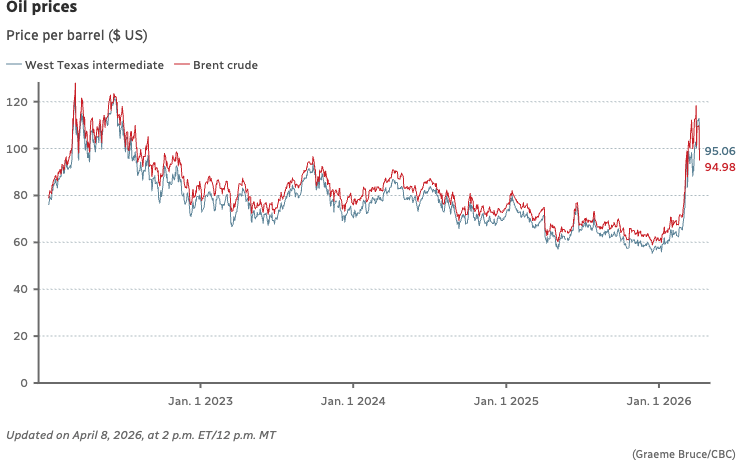
A new Deloitte Canada report says oil and fuel prices are likely to stay elevated through the rest of 2026 as geopolitical conflict in the Middle East continues to pressure global supply. Deloitte expects North American oil prices to average around $85 per barrel this year, up from $67 in 2025, while gasoline, diesel, and jet fuel prices may remain under pressure as long as crude stays elevated. Although prices may ease later in the year, the report suggests energy markets will likely remain volatile and supply-sensitive for the foreseeable future.
 |
Energy Market Perspective
Why Higher Oil Prices May Matter More in 2026
Recent moves in global oil markets have reinforced a view many institutional analysts now share: energy prices are likely to remain elevated through much of 2026, even if volatility persists. Deloitte Canada recently projected North American oil prices to average about $85 per barrel this year, up meaningfully from 2025 levels, while noting that supply disruption risk tied to the Middle East remains a major driver. The firm also warned that refined products such as gasoline, diesel, and jet fuel could stay under pressure while crude remains elevated.
This view is increasingly echoed across major financial institutions. Morgan Stanley Research now expects oil to average roughly $80–$90 per barrel in 2026, even if tensions ease, and has emphasized that higher oil can quickly shift from being only an inflation issue to a broader growth issue. J.P. Morgan has similarly highlighted that oil spikes tied to Hormuz-related disruption tend to weigh on both growth expectations and real household purchasing power, even as inflation concerns reaccelerate.
For advisors, the takeaway is not simply that oil is higher. It is that energy has re-emerged as a macro transmission channel: higher crude can feed inflation expectations, pressure consumer spending, complicate central-bank policy, and create dispersion across sectors and portfolios. Goldman Sachs has noted that geopolitical shocks can drive prices well above fair-value estimates when markets begin pricing in the risk of persistent supply disruptions, particularly around critical transit routes such as the Strait of Hormuz.
In practical terms, this environment may support renewed attention to real assets, energy exposure, inflation-sensitive positioning, and portfolio resilience. For RIAs, CFPs and other fiduciary advisors, elevated energy prices are not just a commodity story. They are part of the broader 2026 conversation around inflation persistence, economic resilience, and how to position client portfolios when geopolitical risk can quickly reprice the market.
Ask the "Tax Guy"
One of the unique benefits associated with investing in an oil and gas working interest well development program is the potential for significant tax deductions. While the rules can be technical, the core concepts are important for investors to understand when evaluating the full opportunity. With that in mind, we asked our EVP of Tax, Rex Gifford:
Q. What are the “Three Musketeers” types of deductions applicable to investing in an oil and gas working interest well development program?
A: The “Three Musketeers” types of deductions are:
1. Intangible Drilling Costs (“IDCs”)
2. Tangible Costs Deducted by claiming Bonus Depreciation
3. Leasehold Costs (oil and gas mineral interests which authorize Grantee to drill oil and gas wells within the boundaries of the oil and gas mineral lease).
These types of deduction may be claimed in the following manner:
-
Intangible Drilling Costs (IDCs) IRC Section 263(c) and Treasury Regulation 1.612-4.
Per Treasury Regulation 1.612-4(a), IDCs may be deducted in the current year or capitalized and amortized over sixty months (IRC Section 59(e).
Per Treasury Regulation 1.612-4(d): This subsection specifies the manner of making the election: "The option granted in paragraph (a) of this section to charge intangible drilling and development costs to expense may be exercised by claiming intangible drilling and development costs as a deduction on the taxpayer's return for the first taxable year in which the taxpayer pays or incurs such costs; no formal statement is necessary."
-
Tangible Costs Deducted by claiming Bonus Depreciation (IRC Section 168 (k). With the passage of the Big Beautiful Bill, tangible components used both downhole and surface may be expensed at a rate of 100% of the cost rather than being required to depreciate a portion of the tangible costs over a specified useful life.
-
Leasehold Costs relate to the acquisition of oil and gas mineral interests by means of an oil and gas mineral lease. Leasehold costs are deducted on an annual basis through the greater of Cost Depletion or Percentage Depletion (IRC Sections 611-613A)
-
Cost Depletion: This is based on your adjusted basis in the property. You divide the depletable basis by the estimated total recoverable units (barrels of oil or MCF of gas) to get a per-unit depletion rate, then multiply by the units sold during the year.
-
Percentage Depletion (often more beneficial for small producers): This allows a deduction of 15% of the gross income from the property (with limits, such as not exceeding 100% of the net income from the property before depletion). It is available to independent producers and royalty owners who qualify under Section 613A.
Examples of Leasehold Costs (Lease Acquisition Costs) are:
-
Lease bonuses (payments to the mineral owner for granting the lease)
-
Legal fees, title examination costs, and recording fees
-
Broker commissions
Delay rentals (payments to keep the lease active without drilling) may be a current deduction similar to rent or capitalized (IRC Section 266).
Special Classification: Geological and geophysical (G&G) exploration costs may be amortized ratably over 24 months (IRC Section 167(h).
As described above, the “Three Musketeers” allowable deductions afford a significant opportunity for accelerating current-year deductions, thereby reducing the participant’s income tax liability.
Have a tax question you’d like covered in a future issue? Email it to theupside@kingoperating.com.
DISCLOSURE: For educational purposes only. Not tax, legal or accounting advice. Please consult your tax professional before making any investment or tax-related decisions.
Happening at King

On the Latest Episode of The Jay Young Show: Sean Brown on Veteran Suicide Prevention & Service Dogs
In this week's episode of The Jay Young Show, my co-host Jordan Soto and I filmed live from NAPE Expo. We sat down with Sean Brown, Director of Missions and Awareness at Dogs Inc., for a powerful conversation about veteran transition, mental health, and the life-changing impact of service dogs.
Sean shares his personal story of serving overseas, returning home, and struggling to reconnect with purpose after military life.
Watch it on LinkedIn, Rumble and YouTube (@JayRYoungOfficial).
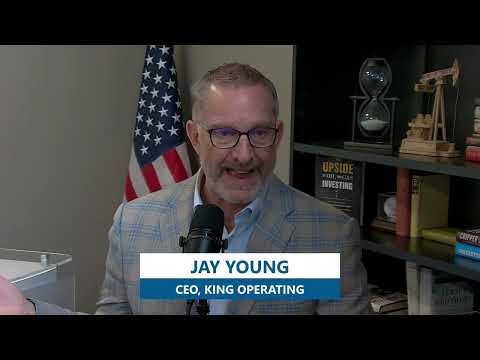
Don't Miss an Episode of Oil & Gas Rundown LIVE
Join us live every Wednesday at 2 p.m. CT for Oil & Gas Rundown LIVE, where we break down the latest headlines, market moves, and industry developments shaping oil and gas in real time. It’s a chance to stay current on up-to-the-minute energy news, hear sharp insights on what matters most, and get a clearer view of where the market may be headed. Whether you follow the industry closely or just want a smart, timely update each week, this is a conversation you won’t want to miss.
YouTube: https://www.youtube.com/@JayRYoungOfficial
LinkedIn: https://www.linkedin.com/in/jayr-young/
Move to Watch
Hamm Signals U.S. Production Increase to Support Allies
Harold Hamm said Continental Resources is increasing drilling activity and raising capex by 15% to 20% to boost U.S. oil production, citing urgent supply needs among allies affected by disruption around the Strait of Hormuz. He said new output will come mainly from new wells across Continental’s major oil plays, though not yet the Bakken. Hamm believes the market is facing a meaningful supply shortfall and expects oil prices to remain better supported even after current geopolitical tensions ease. While some producers are waiting for stronger long-term pricing signals, Continental is moving now, with Hamm arguing U.S. producers need to step up and deliver more barrels.
If you'd like to talk to someone about King and are an accredited investor, you can fill out your information here or schedule a Zoom conversation with one of our SVPs here and someone will reach out.
All the best,
Jay