Newsletter No. 181
Good afternoon,
There’s a lot happening in energy this week, and one thing that stands out to me is how quickly the supply picture can change. Tensions between the U.S. and Iran have pushed oil prices higher again, Venezuela is attracting billions of dollars in new investment as Chevron looks to expand production, and ONEOK is making another major move in the Permian with the help of a $9 billion investment from Apollo. To me, that shows how much attention is still being placed on reliable supply, infrastructure and quality energy assets.
We also have a new episode of The Jay Young Show looking back at my conversation with Richard S. De Witt about leadership, faith and resilience. It is a different kind of conversation, but one that I think is especially relevant when markets and business conditions are changing quickly. Keep reading this week’s The Upside for the full stories, what they could mean for U.S. energy and this week’s featured conversation.
This Week's Headlines
Oil and Gas News
- Chevron Makes a Big Bet on Venezuela
- Iran Tensions Push Oil Prices Higher
What's Happening at King
- Tax Planning Should Start Before Tax Season on The Jay Young Show
- Upcoming Tax Webinar Series Featuring Tax Strategist Ed Lyon
- Upcoming Q4 Market Outlook Featuring John Mauldin
- Oil & Gas Rundown LIVE! If you Missed It
Energy Market Perspective
-
What Venezuela Could Mean for the Oil Market
Move to Watch
-
ONEOK Gets $9 Billion to Keep Growing
Oil and Gas News
Chevron Makes a Big Bet on Venezuela
Chevron plans to invest more than $7 billion in Venezuela over the next five years, with the goal of more than doubling its production there to around 600,000 barrels a day. The company has secured better financial and legal terms along with additional acreage in the Orinoco Belt, where some of Venezuela’s largest oil reserves are located. Chevron says production costs should stay below $20 per barrel, which helps explain why the company sees room to grow even with the political and operating risks that come with Venezuela.
Chevron is already producing about 290,000 barrels a day in the country, and that oil is currently being shipped to the United States. Venezuela as a whole is producing around 1.1 to 1.2 million barrels a day, well below the more than 3 million barrels a day it produced in the late 1990s. The bigger story is that U.S. companies are starting to look seriously at Venezuela again, and if more capital comes in to rebuild fields and infrastructure, the country could become a much bigger part of the global oil supply picture.
Iran Tensions Push Oil Prices Higher
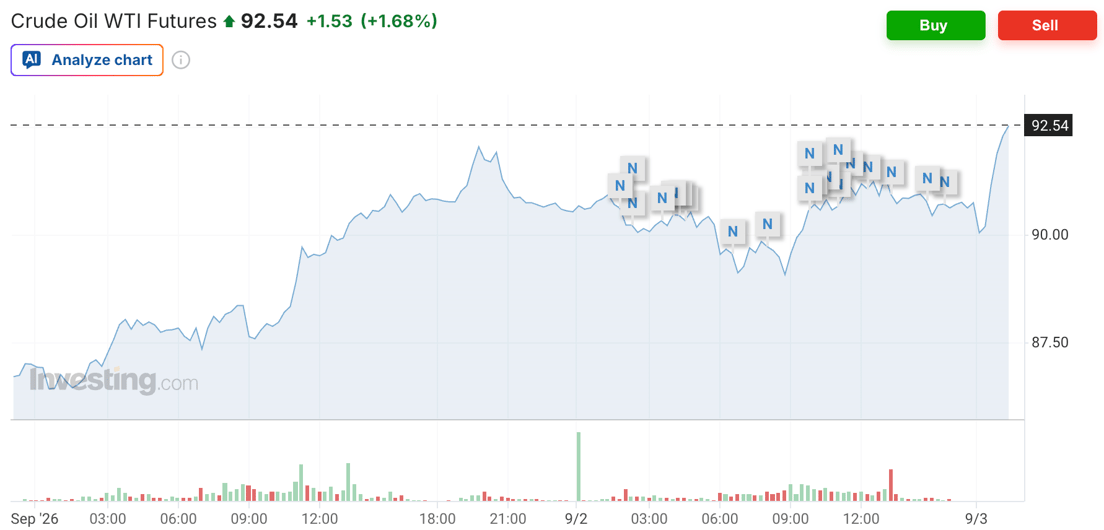
Oil prices moved higher as fighting between the U.S. and Iran picked up again, with WTI climbing above $91 a barrel and Brent nearing $96 before both pulled back slightly. The latest move followed U.S. strikes on Iranian military sites and reports that two Iranian government tankers were also targeted under a new “tanker for tanker” approach. Iran responded with missile and drone attacks aimed at U.S. interests in Jordan, Kuwait and Bahrain, adding more concern around the security of oil flows through the region.
The market is also watching U.S. supply closely. The American Petroleum Institute reported a 2.6 million barrel drop in crude inventories, while another 3.1 million barrels were pulled from the Strategic Petroleum Reserve. With tensions rising near the Strait of Hormuz and U.S. inventories moving lower, traders are once again pricing in the risk of supply disruptions, which could keep oil prices volatile in the near term.
 |
| Get Oil & Gas Insights |
| Book a Meeting |
| Learn More |
Happening at King

Energy Market Perspective
What Venezuela Could Mean for the Oil Market
Venezuela matters because it has a huge resource base, but bringing those barrels back to market is not something that happens overnight. The country is currently producing around 1.1 to 1.25 million barrels a day, well below the more than 3 million barrels a day it produced in the 1990s. Chevron alone now plans to invest more than $7 billion over five years and grow its Venezuelan production to roughly 600,000 barrels a day. That is meaningful new supply, but it will take years of drilling, repairs and infrastructure investment to get there.
For oil prices, more Venezuelan production could eventually put some downward pressure on crude, but the market is dealing with much bigger forces right now. Middle East disruptions have already caused major swings in oil prices this year, and U.S. crude inventories remain tight. The EIA expects commercial inventories to stay below their recent five-year low through the end of 2026, while U.S. refiners are running hard to meet demand. On September 2, refinery utilization reached about 98%, the highest level since 2018.
Venezuela is also important because much of its oil is heavy crude, which can be a good fit for complex Gulf Coast refineries that were built to process heavier barrels. More Venezuelan crude reaching the U.S. could give those refiners another source of supply and help replace barrels from other countries. That could improve the crude supply picture for refiners, but it does not automatically mean cheap gasoline or diesel. Refinery capacity, transportation, inventories and global demand still play a major role in what consumers ultimately pay.
For someone looking at the oil and gas market, the main takeaway is that Venezuela adds another potential source of future supply, but it does not change the need for continued investment in U.S. production. The world is consuming a tremendous amount of energy, existing wells naturally decline, and large projects take years to bring online. Venezuela may become a bigger piece of the supply picture, while U.S. oil and gas development remains an important part of meeting demand and keeping the market supplied. This is an energy-market perspective, not a prediction of future oil prices or investment returns.
Learn More about how King Operating Corporation is helping develop the energy America needs for the future.
Move to Watch
ONEOK Gets $9 Billion to Keep Growing
ONEOK had recently said its run of big acquisitions was slowing down, but a $9 billion investment from Apollo has given the company room to make another major move. ONEOK is using part of that money to buy Brazos Midstream’s Midland Basin assets for $4.425 billion and plans to use another $5 billion to pay down debt. The Brazos deal will more than double ONEOK’s processing capacity in the Midland Basin and add a large network of gathering lines tied to producers such as ExxonMobil and Diamondback Energy.
The tradeoff is that Apollo will receive a larger share of ONEOK’s cash flow while its investment is in place, which could leave less cash available for shareholders in the near term. Still, the deal strengthens ONEOK’s balance sheet and gives the company a bigger position in the Permian, with more natural gas and NGL (Natural Gas Liquids) volumes feeding into infrastructure it already owns. For the broader oil and gas business, it is another sign that companies are still willing to put serious money behind Permian infrastructure when they see long-term production growth ahead.
All the best,
Jay