
Newsletter No. 168
Good afternoon,
This week’s energy headlines point to a stronger theme taking shape: confidence is returning to U.S. oil and gas. Texas rig activity is moving higher, U.S. drillers have added rigs for five straight weeks, and deal activity across the sector continues to show that buyers are still interested in quality assets.
That matters because rig count growth and renewed M&A momentum are both signs that the market still sees long-term value in domestic production. As global uncertainty keeps energy security front and center, American oil and gas remains a critical piece of the conversation around diversification, inflation sensitivity, real assets, and supply reliability.
In this week’s issue of The Upside, I look at why rising Texas activity matters, why consolidation could strengthen the sector, and why private energy opportunities may deserve renewed attention in today’s market environment.
This Week's Headlines
Oil and Gas News
- Oil Inventory Crunch Could Keep Fuel Prices Rising
- Hormuz Disruption Could Become the New Normal
- Delfin Greenlights $5B Floating LNG Export Project
-
China’s Energy Lifeline Tightens Around Russia
Energy Market Perspective
-
Renewable Bottlenecks Reinforce the Need for Reliable Oil and Gas
- Ask the "Tax Guy"
What's Happening at King
- Featured on Newsmax: Oil Supply Warning: Oil Wells Aren't Like Faucets
- Building Lasting Investor Relationships Through the Best Ever Conference
- Don't Miss an Episode of the Oil & Gas Rundown LIVE!
Move to Watch
-
Weatherford Expands Completions Tech with NCS Acquisition
Oil and Gas News
Oil Inventory Crunch Could Keep Fuel Prices Rising
Global oil and gas inventories are falling to historic lows as the war in Iran continues to disrupt supply and keep the Strait of Hormuz closed. Even if the conflict ends soon, analysts warn that depleted reserves, reduced shipping flows, and limited refining capacity could keep fuel prices elevated through the summer. Energy executives say the market has been cushioned by emergency stockpiles, but those reserves are running down quickly, raising the risk of another sharp increase in oil and gasoline prices.
Hormuz Disruption Could Become the New Normal
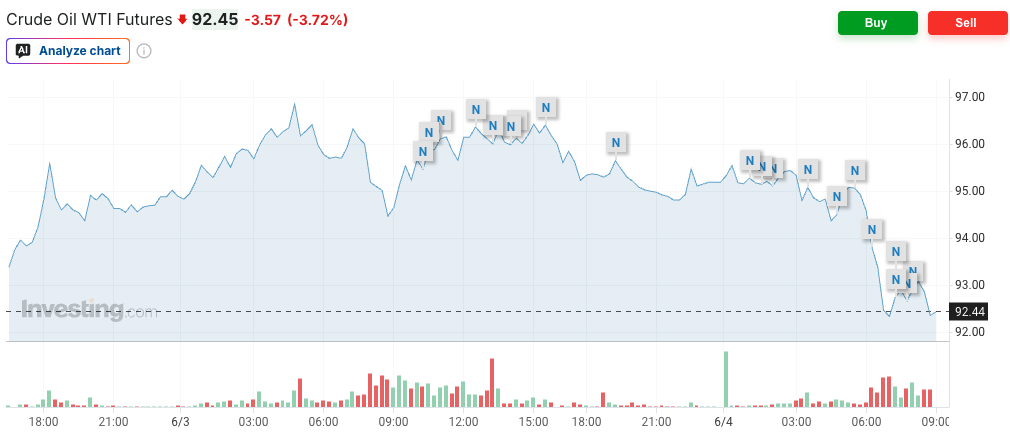
Oil and gas traffic through the Strait of Hormuz may not fully return to pre-war levels as Iran maintains influence over the key shipping chokepoint. Analysts warn that tanker flows could stabilize at only 60–70% of previous levels, creating a more politically divided shipping environment where access depends on alignment rather than open navigation. At the same time, Exxon and Chevron executives are warning that global oil inventories are reaching critically low levels, which could push prices sharply higher if Persian Gulf disruptions continue into June and July.
Delfin Greenlights $5B Floating LNG Export Project
Delfin Midstream has secured a $5 billion final investment decision for the first phase of its floating LNG project off the coast of Louisiana. The facility is expected to become the first floating LNG export project in the U.S. and the largest of its kind globally, with planned export capacity of 4.4 million tonnes per year.
Backed by investors including Global Infrastructure Partners, Mitsui O.S.K. Lines, Diameter Capital Partners and Vitol, the project will use offshore floating vessels equipped with liquefaction technology to export U.S. natural gas to global markets. Delfin says the project is fully permitted and supported by long-term LNG sales agreements with major global energy companies, positioning it as a major step forward for U.S. energy infrastructure and global LNG supply.
China’s Energy Lifeline Tightens Around Russia
China and Russia continue to publicly promote cooperation, but their relationship is becoming increasingly one-sided. Russia depends heavily on China for discounted energy sales, sanctioned technology, and economic support as the war in Ukraine continues. China, meanwhile, is using Russia’s isolation to secure cheap oil and gas, gain strategic leverage, and expand long-term influence, particularly in Russia’s Far East. The recent Xi-Putin summit highlighted this imbalance, especially with China refusing to finalize the Power of Siberia 2 pipeline deal on Russia’s preferred terms. Overall, Russia’s “lifeline” to China is starting to look more like a constraint, with Beijing treating Moscow less as an equal partner and more as a supplier and geopolitical buffer.
Energy Market Perspective
Renewable Bottlenecks Reinforce the Need for Reliable Oil and Gas
BlackRock-backed Atlas Renewable Energy has paused roughly $1 billion in planned solar investments in Brazil, citing rising curtailment and grid limitations. In simple terms, Brazil has added renewable power faster than its transmission system can handle. As a result, solar and wind power that could be produced is sometimes rejected by the grid, leaving developers unable to sell the electricity they expected to generate.
This is an important energy market signal. The issue is not that renewables have no role in the future energy mix. The issue is that renewable power depends heavily on infrastructure that is not always ready: transmission lines, storage, grid balancing, backup generation and market rules that allow projects to remain economic. Reuters reported that Atlas had at least 1.5 GW of projects on hold, while existing projects saw curtailment rates as high as 15%–25% in the current quarter. Fitch Ratings has also warned that curtailment pressure in Brazil could continue until 2030, creating ongoing risks for renewable project cash flow and reliability.
For oil and gas, this reinforces a core reality of the energy market: demand for dependable energy is not going away. Solar and wind can add meaningful supply, but they do not replace the need for reliable, dispatchable energy sources that can perform when the grid is constrained, demand rises or renewable generation falls short. Natural gas, in particular, remains critical because it can help balance power systems and provide backup capacity when intermittent resources face limitations.
The takeaway is clear: the energy transition is running into infrastructure reality. Building renewable projects is only one piece of the equation. Without the grid capacity to move that power and the backup systems to support reliability, renewable growth can hit a wall. That keeps oil and gas essential, not as a temporary bridge, but as a dependable part of a balanced energy system.
Ask the "Tax Guy"
This week, we want our EVP of Tax, Rex Gifford, to break down an important topic for investors: how leverage can impact the tax treatment of oil and gas development costs within a partnership. Specifically, Rex will address the tax consequences of using debt to fund drilling, testing, completing, stimulating, and equipping oil and gas wells.
Q. For a Partnership, identify the tax consequences of drilling, testing, completing, stimulating, and equipping oil and gas wells funded by using leverage (debt)?
A: For the Partnership to use debt to fund the development of the targeted oilfields which are assets of the Partnership, deductions for intangible drilling costs and expensing tangible costs are generated. As discussed in previous newsletters these deductions are classified as follows:
- Intangible Drilling Costs (IDCs): These include non-salvageable expenses like labor, fuel, chemicals, site preparation, surveys, and certain drilling-related services (typically 60-80% of total well costs). Under IRC §263(c), partnerships can elect to deduct IDCs currently in the year incurred (subject to economic performance rules under §461), rather than capitalizing them. This provides significant current-year ordinary deductions that are allocated to partners and reported on their annual Schedule K-1.
- Tangible Drilling Costs (TDCs) / Equipment Costs: These cover physical assets with salvage value, such as casing, tubing, wellheads, pumps, tanks, and surface equipment (typically 20-40% of costs). Following the enactment of the Big Beautiful Bill on July 4, 2025, IRC Section 168 (k), bonus depreciation, was made permanent. As a result, 100% of these tangible costs may be deducted through bonus depreciation. These deductions are also reported on their annual Schedule K-1.
Impact of Leverage (Debt Financing)
- Partnership Interest Basis Increase (IRC §752): Partnership liabilities increase each partner’s outside basis in their partnership interest proportionally. This increase can come from either (1) recourse debt (allocated based on who bears the economic risk of loss) or (2) nonrecourse debt (generally allocated according to profit-sharing ratios). The increased basis allows partners to deduct allocated losses, including IDCs and bonus depreciation, up to their adjusted basis in the partnership. Without sufficient basis, these deductions are suspended until additional basis is created through future income allocations or additional capital contributions.
- At-Risk Rules (IRC §465): Deductions are further limited to the amount the partner has “at risk.” Cash contributions and recourse debt (for which the partner is personally liable) increase a partner’s at-risk amount. Nonrecourse debt generally does not. This can create situations where a partner has sufficient basis but insufficient at-risk amount, resulting in suspended IDC and bonus depreciation deductions.
Leverage can significantly affect the annual allocation of the Partnership’s taxable income to partners. For example, as the Partnership generates net operating income, each partner’s basis in their partnership interest increases. However, this basis increase is typically offset by the allocation of current-year or previously suspended deductions (primarily IDCs and bonus depreciation). As a result, in many cases involving leveraged drilling programs, a partner’s pro-rata share of current-year taxable income may be reduced to zero (or near zero) because the debt-funded IDC and bonus depreciation deductions equal or exceed the Partnership’s net operating income.
Have a tax question you’d like covered in a future issue? Email it to theupside@kingoperating.com.
DISCLOSURE: For educational purposes only. Not tax, legal or accounting advice. Please consult your tax professional before making any investment or tax-related decisions.
Happening at King
Featured on Newsmax: Oil Supply Warning: Oil Wells Aren't Like Faucets

Building Lasting Investor Relationships Through the Best Ever Conference
As a proud sponsor of the Best Ever Conference for the past five years, King Operating has had the privilege of connecting with an exceptional community of investors, operators, and industry experts. Many of our strongest investor relationships and partnerships have originated through the conference and the broader real estate community.We're excited to see the Best Ever Conference come to Dallas TX next year. Known for bringing together high-caliber investors, operators, and thought leaders from across the country, BEC offers a unique opportunity to gain fresh perspectives, build valuable relationships, and discover new investment opportunities. Click here to learn more about the 2027 conference.
 |
Don't Miss an Episode of Oil & Gas Rundown LIVE
Join us live every Wednesday at 2 p.m. CT for Oil & Gas Rundown LIVE, where we break down the latest headlines, market moves, and industry developments shaping oil and gas in real time. It’s a chance to stay current on up-to-the-minute energy news, hear sharp insights on what matters most, and get a clearer view of where the market may be headed. Whether you follow the industry closely or just want a smart, timely update each week, this is a conversation you won’t want to miss.
YouTube: @JayRYoungOfficial
LinkedIn: jayr-young

Move to Watch
Weatherford Expands Completions Tech with NCS Acquisition
Weatherford is buying NCS Multistage, a smaller oilfield technology company, for about $139 million. NCS makes tools that help oil and gas companies complete wells more efficiently, especially in fracking and unconventional drilling.
For Weatherford, the deal adds useful technology, strengthens its completions business and gives it a bigger presence in Canada and other international markets. Weatherford also expects to save at least $15 million a year after combining the companies.
If you'd like to talk to someone about King and are an accredited investor, you can fill out your information here or schedule a Zoom conversation with one of our SVPs here and someone will reach out.
All the best,
Jay