
Newsletter No. 156
Good afternoon,
This past week has been marked by significant developments around the world, with escalating geopolitical tensions and ongoing conflicts continuing to impact global energy markets. From heightened instability in the Middle East to concerns surrounding key shipping routes and global oil supply, these events serve as a reminder of how interconnected the world’s energy systems truly are. As uncertainty grows, the oil and gas industry remains at the center of conversations about energy security, supply stability and the role of domestic production in supporting global markets.
Amid the headlines and market volatility, we are also mindful of the human cost behind these events. Our thoughts and prayers remain with the military personnel serving around the world, as well as the many civilian lives that have been lost or affected by the ongoing conflicts. In times like these, we are reminded of the importance of resilience, leadership and a commitment to strengthening the energy systems that help power economies and communities worldwide.
This Week's Headlines
Oil and Gas News
- Iran Attack on Oman Oil Hub Raises Supply Risk
- Iran Warns Oil Could Hit $200 if Hormuz Disrupted
- IEA Warns of Largest Oil Supply Disruption in History
- U.S. Gas Prices Jump Above $3.50 as Tensions Disrupt Oil Supply
Energy Market Perspective
-
Geopolitical Tensions Raise Risk Premium in Oil Markets
- Oil Prices vs. Investor Returns: It's What's Beneath the Surface That Counts
- Ask the "Tax Guy"
What's Happening at King
-
Startup Fundraising Secrets & Venture Capital Trends on The Jay Young Show
Move to Watch
-
Stephens Family Plans $2B Diamondback Share Sale
 |
Oil and Gas News
Iran Attack on Oman Oil Hub Raises Supply Risk
Iranian drones struck fuel storage tanks at the Port of Salalah in Oman, a key oil shipping hub used to bypass the Strait of Hormuz. The attack is part of a growing series of strikes on energy infrastructure and ships across the Middle East as tensions escalate.
Rising threats to Middle East oil supply and shipping routes could push WTI prices higher, which may benefit U.S. oil and gas producers if disruptions continue.
Iran Warns Oil Could Hit $200 if Hormuz Disrupted
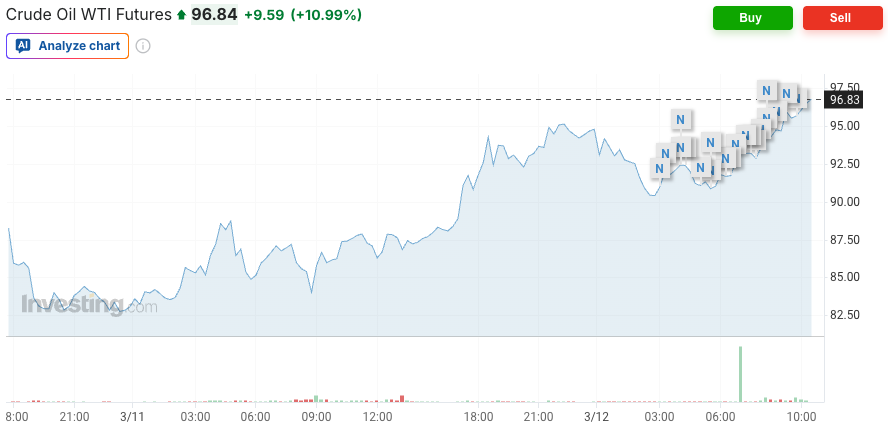
Iran warned oil prices could surge to $200 per barrel if the conflict with the United States and Israel escalates. Iran has threatened to block oil shipments through the Strait of Hormuz and attacks on vessels and mining activity have already caused tanker traffic to collapse and oil prices to surge above $100 per barrel.
Recent drone strikes on regional energy infrastructure and attacks on shipping have already caused volatility in oil markets. If disruptions to Hormuz or Gulf exports escalate, WTI and global oil prices could rise sharply due to supply risks.
IEA Warns of Largest Oil Supply Disruption in History
The International Energy Agency warns the world could face the largest oil supply disruption in history if tensions continue to disrupt flows through the Strait of Hormuz. Even a partial shutdown could remove millions of barrels per day from global markets, sending shockwaves through energy prices and supply chains.
While global markets remain vulnerable to geopolitical chokepoints, the situation also highlights the strategic importance of North American energy production. U.S. operators have the ability to help stabilize global supply when disruptions occur, reinforcing the role of American energy in global energy security.
U.S. Gas Prices Jump Above $3.50 as Tensions Disrupt Oil Supply
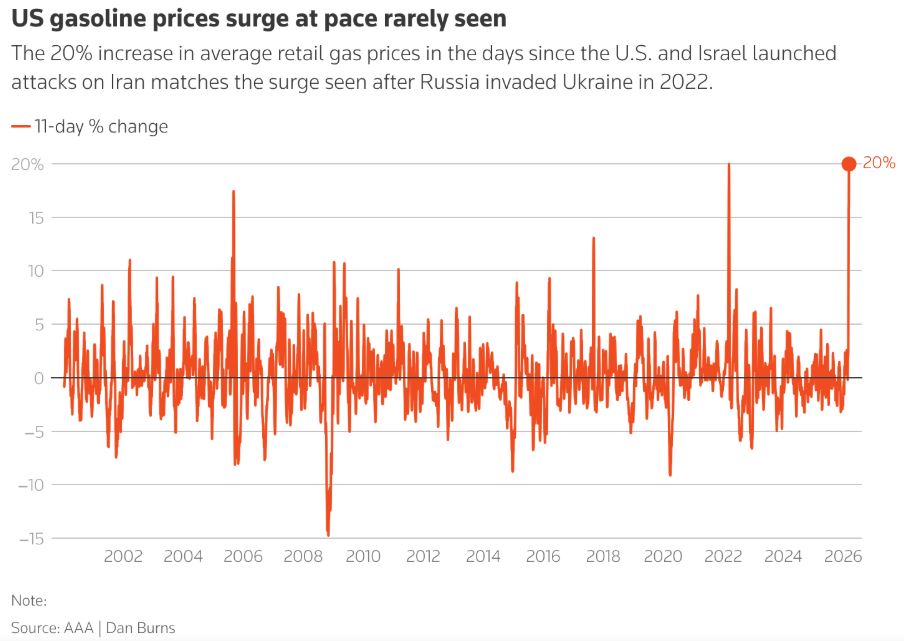
U.S. gasoline prices have climbed above $3.50 per gallon, reaching the highest level since May 2024, according to AAA and GasBuddy. The spike follows escalating tensions between the U.S., Israel and Iran, which have disrupted oil shipments through the Strait of Hormuz. Prices have risen nearly 60 cents in just 11 days, and analysts warn further increases are likely due to continued shipping disruptions and the seasonal shift to more expensive summer-grade gasoline. Rising fuel costs could pressure consumers and carry political implications ahead of the upcoming midterm elections.
 |
Energy Market Perspective
Geopolitical Tensions Raise Risk Premium in Oil Markets
Several factors suggest oil prices are likely to remain supported above the $65–$70 per barrel range.
First, rig counts have declined, meaning fewer wells are being drilled. Less drilling today typically results in lower production growth in the future.
Second, even when wells do come online, oil production naturally declines over time, especially in shale plays. Without continuous drilling to replace those declines, overall supply can tighten.
Third, global demand for oil remains strong. Transportation, manufacturing, and global energy consumption continue to rely heavily on oil. When demand stays steady while supply growth slows, the result is simple Economics 101: when we need oil and there isn’t enough available, prices rise.
Geopolitical risks are also adding to the outlook. Rising tensions between Iran, the United States, and Israel are increasing the risk of disruptions to global oil supply. Iran has warned that prices could surge if shipments through the Strait of Hormuz continue to be restricted. This narrow passage carries roughly 20% of the world’s oil supply, making it one of the most critical energy chokepoints globally.
Recent attacks on shipping and regional energy infrastructure have already added volatility to crude markets. Analysts note that geopolitical uncertainty often adds a “risk premium” to oil prices.
For investors, this environment highlights the strategic importance of U.S.-based energy production, which can benefit when global supply disruptions push commodity prices higher.

Ask the "Tax Guy"
Investors often ask what happens to tax deductions if a drilling project doesn’t produce as expected. We asked our EVP of Tax, Rex Gifford, to explain how intangible drilling cost deductions work in those situations.
Q: Can investors still claim intangible drilling cost (IDC) deductions even if a well does not produce commercial quantities of oil?
A: For drilling any oil and gas well, two primary categories of tax deductions apply: intangible drilling costs (IDCs) and tangible drilling costs.
Intangible Drilling Costs (IDCs) include expenses with no salvage value, such as labor, drilling fluids, stimulation costs (hydraulic fracturing) and site preparation. Under IRC Section 263(c) and IRS Regulation 1.612-4, IDCs are generally 100% deductible in the year they are paid or incurred, regardless of whether the well ultimately becomes productive or is deemed a dry hole.
Tangible Drilling Costs include equipment and materials that have salvage value, such as casing, wellheads and other physical components. Following the enactment of the One Big Beautiful Bill Act (OBBBA), these costs are 100% deductible by claiming bonus depreciation (IRC Section 168 (k)). If any equipment is later sold or reused, the deduction would be reduced by the amount recovered.
Costs associated with acquiring working interest oil and gas mineral rights may also be deductible if the project is abandoned. Under IRC Section 165, an abandonment loss may be claimed when a taxpayer permanently abandons the property and records a completed transaction supported by identifiable events, such as surrendering the lease or plugging a non-productive well.
In summary: If a well is determined to be non-commercial (a dry hole), 100% of the associated drilling costs may generally be deducted in the taxable year the costs are paid, incurred, or abandoned, subject to applicable tax rules.
Have a tax question you’d like covered in a future issue? Email it to theupside@kingoperating.com.
DISCLOSURE: For educational purposes only. Not tax, legal or accounting advice. Please consult your tax professional before making any investment or tax-related decisions.
Happening at King

Startup Fundraising Secrets & Venture Capital Trends on The Jay Young Show
In this week's episode of The Jay Young Show, my co-host Jordan Soto and I sat down with Stephanie Rieben-de Roquefeuil, co-founder of Diadem Capital.
Stephanie launched Diadem Capital to address one of the biggest challenges in venture capital: efficient deal flow and investor access. Today, the platform connects more than 1,600 venture capital firms, family offices, syndicates and private credit funds with high-quality startups seeking capital.
Watch it on LinkedIn, Rumble and YouTube (@JayRYoungOfficial).
Moves to Watch
Stephens Family Plans $2B Diamondback Share Sale
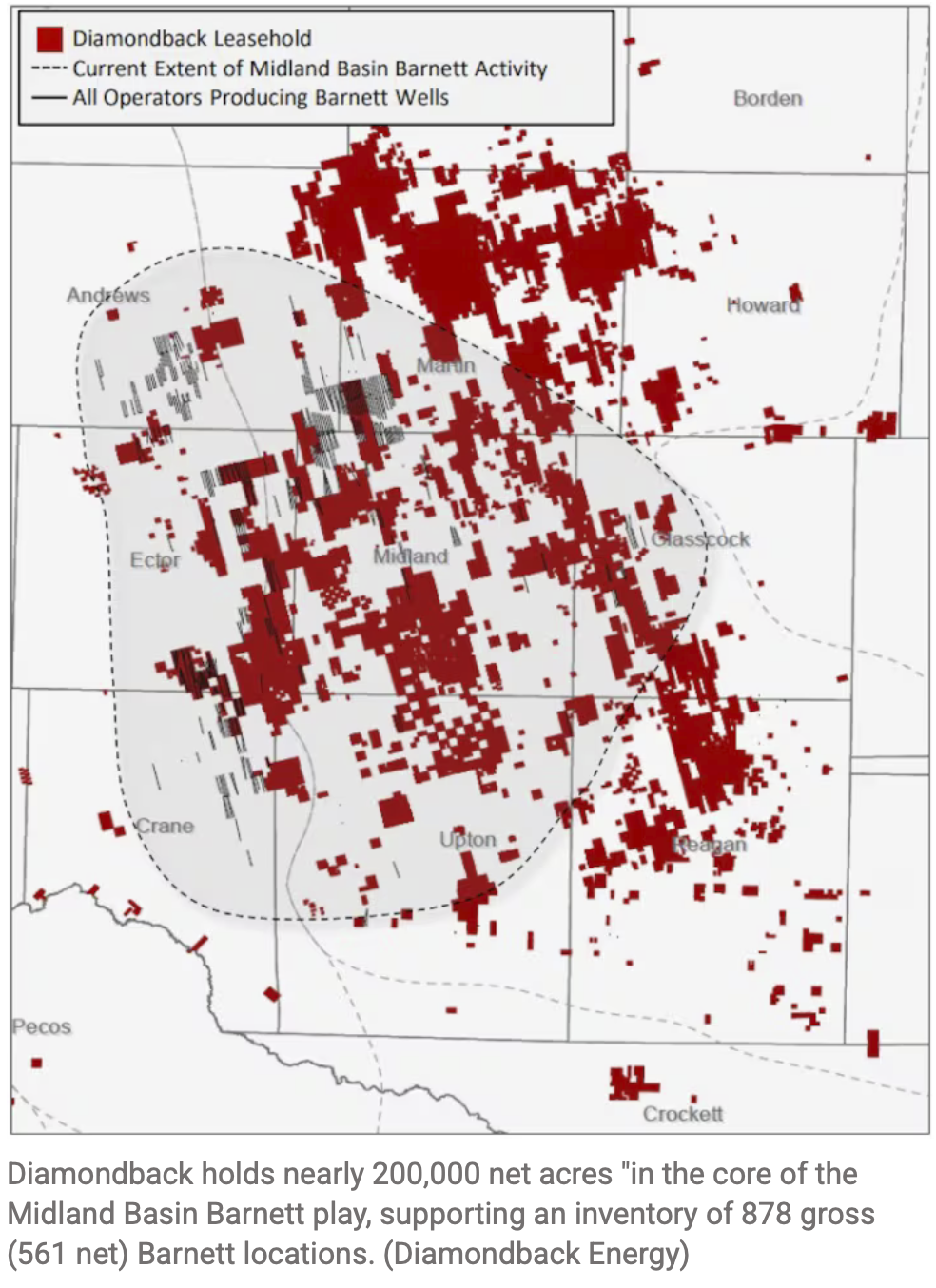
The family of late Permian oilman Autry Stephens plans to sell about $2 billion worth of shares in Diamondback Energy, following the company’s $26 billion acquisition of Endeavor Energy Resources in 2024. Lyndal Stephens Greth’s investment company currently owns about 34% of Diamondback and plans to sell roughly 11 million shares, though it will still hold about 30% of the company after the sale.
The merger created one of the largest Permian Basin operators, with Diamondback now controlling more than 770,000 net acres in the Midland Basin and producing nearly 1 million barrels of oil equivalent per day. The company continues to test deeper drilling zones to support long-term production growth.
If you'd like to talk to someone about King and are an accredited investor, you can fill out your information here or schedule a Zoom conversation with one of our SVPs here and someone will reach out.
All the best,
Jay