

Newsletter No. 151
Good afternoon,
Energy markets are sharpening their focus on fundamentals, with supply discipline, pricing signals, and infrastructure performance driving today’s headlines. From fuel availability to grid reliability, these are the stories shaping oil and gas markets this week, plus the latest from King.
This Week's Headlines
- Steady Oil Prices Provide Solid Base for U.S. Producers
- New Texas Oil Port Approved to Boost U.S. Crude Exports
- LNG Market Could Stay Tight in 2026, Despite New Supply
- Groundhog Day, Macro Risk & Market Distraction with Guest Peter Boockvar
- Gas Assets Take Center Stage as Buyers Look Beyond the Permian
Oil and Gas News
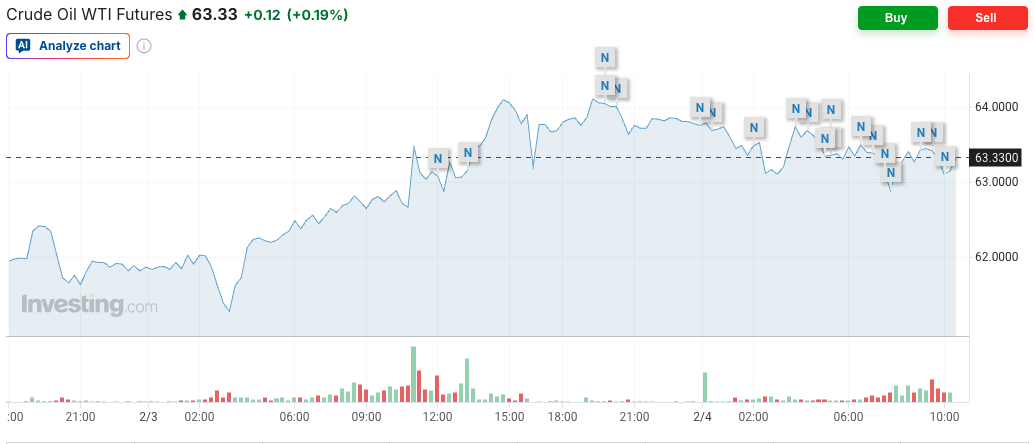
Steady Oil Prices Provide Solid Base for U.S. Producers
U.S. oil prices are holding firm around $63 a barrel, a positive sign for domestic oil and gas operators. Rather than sliding lower, prices are staying stable thanks to steady demand and global factors that continue to support the market.
For producers and investors, this price stability helps reduce uncertainty, supports cash flow planning, and reinforces disciplined capital strategies. In short, the market is showing resilience, giving U.S. operators a dependable pricing environment as they focus on efficient operations and long-term value creation.
 |
New Texas Oil Port Approved to Boost U.S. Crude Exports
The federal government has approved a new deepwater oil export terminal off the Texas coast. The project, led by Sentinel Midstream, will allow up to 1 million barrels of oil per day to be shipped directly from Texas to global markets.
Right now, the U.S. relies mostly on one deepwater oil port in Louisiana. Adding a second port in Texas will reduce congestion and make it faster and cheaper to load large oil tankers.
This approval comes as U.S. oil exports continue to grow rapidly. Exports have risen from about 100,000 barrels per day in 2013 to more than 4.4 million barrels per day by late 2025, driven largely by shale production.
Bottom line: This new terminal helps the U.S. move more oil overseas more efficiently while supporting domestic energy production and jobs.
LNG Market Could Stay Tight in 2026, Despite New Supply
Italy’s energy giant Eni says the global LNG market in 2026 will be tight and carefully balanced, not oversupplied as many predict. Europe has burned through gas reserves faster than expected this winter and will need to import large amounts of LNG this summer to refill storage ahead of next winter. At the same time, Asia is expected to increase LNG use as prices ease.
Because demand is strong in both Europe and Asia, there is little margin for error. A cold snap or heat wave could quickly strain supplies and push prices higher. While analysts expect a wave of new LNG projects to boost global supply this year and next, Eni believes demand will rise just as fast, keeping the market tight rather than flooded.
Happening at King
 |
Groundhog Day, Macro Risk & Market Distraction with Guest Peter Boockvar
In this week's episode of The Jay Young Show, my co-host Jordan Soto and I sat down with renowned macro strategist Peter Boockvar, Chief Investment Officer at One Point BFG Wealth Partners and author of The Boock Report, for a no-nonsense conversation on markets, risk and the cost of distraction.
We also kicked things off with Oil & Gas News, as Groundhog Day brought another extended winter forecast. With Punxsutawney Phil calling for more cold, energy markets are feeling the impact: firm natural gas and power demand, delayed storage rebuilds, and tighter conditions heading into late winter and early spring.
Watch it on LinkedIn, Rumble and YouTube (@JayRYoungOfficial).
Moves to Watch
Gas Assets Take Center Stage as Buyers Look Beyond the Permian
Big oil and gas buyers are shifting their attention away from the Permian Basin because there aren’t many high-quality assets left for sale. Many Permian owners are holding out, hoping for higher oil prices before they sell. As a result, Permian deals made up only a small slice of late-2025 U.S. oil and gas M&A activity, according to research from Enverus.
Instead, investors, both U.S. and international, are chasing natural gas assets in places like Haynesville, Appalachia, and the Midcontinent. Rising global LNG demand is making U.S. gas production especially attractive. Japanese buyers and other global players are pouring billions into U.S. shale gas, while financial groups using asset-backed financing are aggressively bidding on steady, cash-flowing gas production.
With fewer premium Permian opportunities available, dealmaking is broadening across multiple basins. In short, the M&A spotlight is moving from oil-heavy Permian assets to gas-focused plays that can feed growing LNG demand worldwide.
If you'd like to talk to someone about King and are an accredited investor, you can fill out your information here or schedule a Zoom conversation with one of our SVPs here and someone will reach out.
All the best,
Jay